Kiyomizu Tea Ceremony Guide
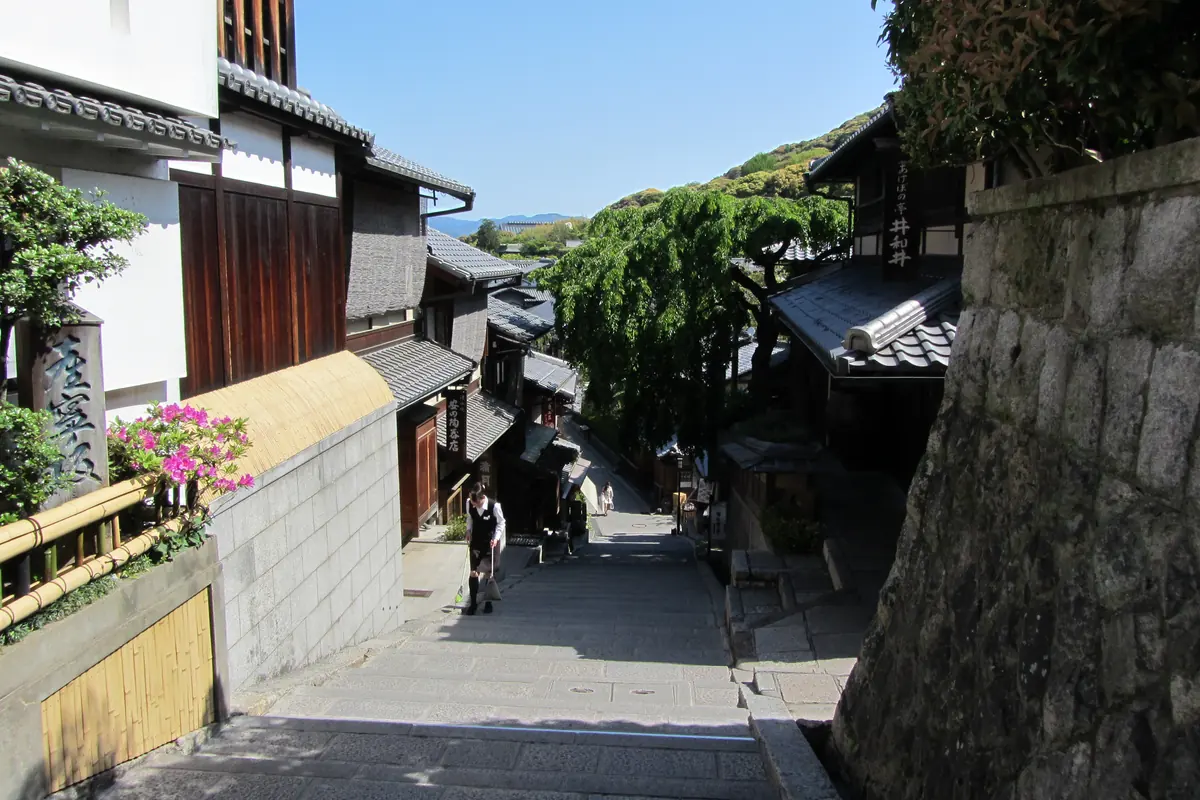
A tatami tea room with sliding paper screens open onto a garden of pines and moss; a general photograph of a tea room in Kanazawa, not of this tea house

Kyoto · Sannenzaka tea house

Whisk matcha overlooking a Kyoto garden

4.8 (4,573 verified reviews · GetYourGuide)

A tea master prepares the first bowl in a Sannenzaka tea house, and you whisk the second yourself.

A tea master, a traditional sweet, two cups of Uji matcha and a garden in view. Likely to sell out.

Four things to know first

Your bowl
Two cups of matcha from Uji: one made by the host, one made by you.
Kimono
Kimono rental is not available at this tea house.
Children
Children aged 7 and under cannot enter.
Bags
No luggage or large bags inside the tea house.

The tea house hour

How the hour unfolds

The organiser describes one sequence for every group: a welcome, a short talk, a demonstration, then a bowl of your own. Check the calendar for starting times; your confirmation repeats the one you pick.

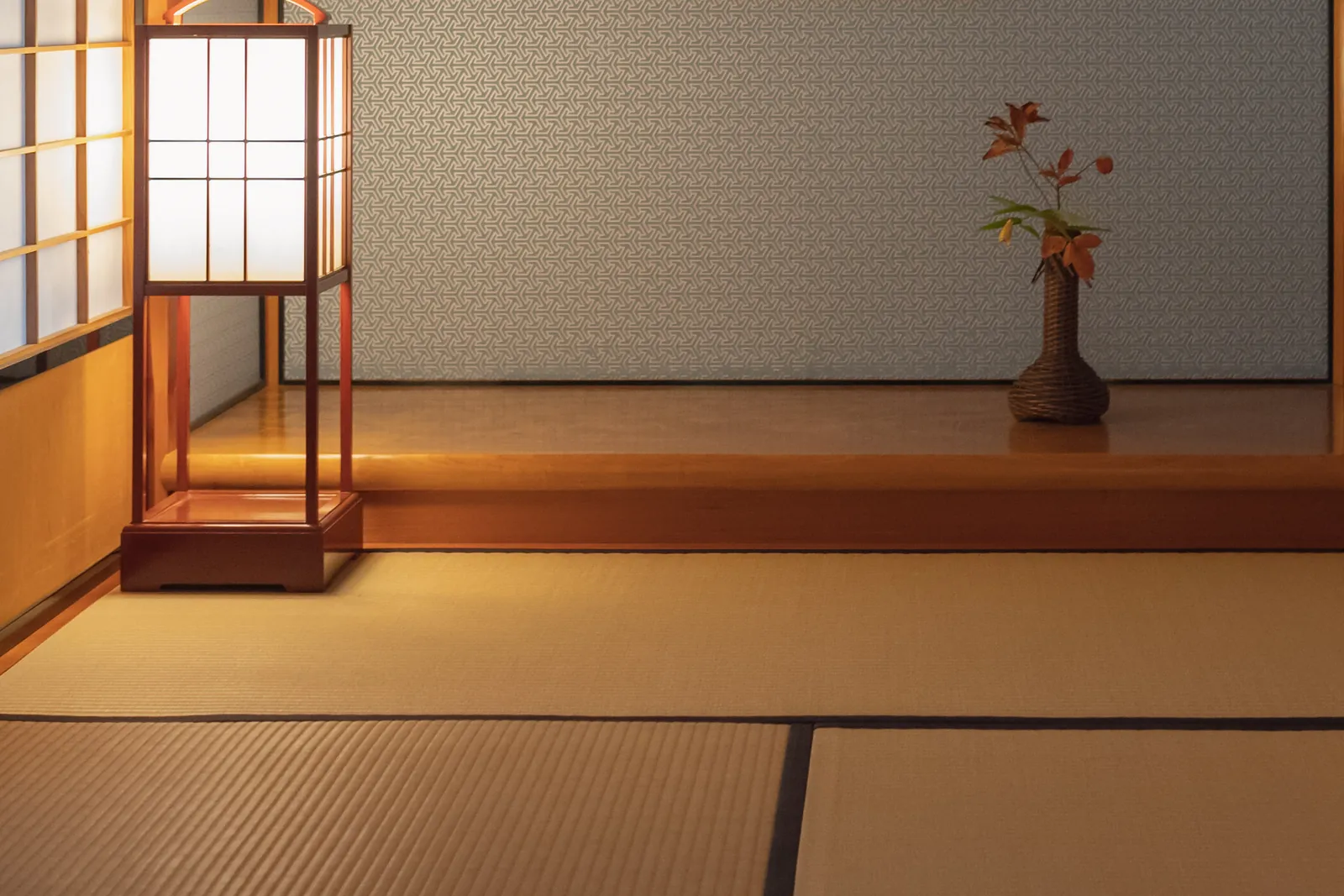
A tatami tea-room alcove with a paper lantern and a single autumn branch in a vase; a general photograph of a tea room in Kanazawa, not of this tea house
  1. Welcome

    A guide, a garden and a tea house

    A guide welcomes you and introduces the garden around the tea house, which the organiser credits to the landscape designer Ogawa Jihei VII. Leave large bags and luggage at your accommodation, since they cannot come in.

  2. Talk

    A short talk on the philosophy of tea

    Before the tea is made, you hear a brief introduction to the philosophy and traditions behind the ceremony. The organiser describes it as a practice that has lasted about 500 years.

  3. Watch

    The tea master prepares matcha

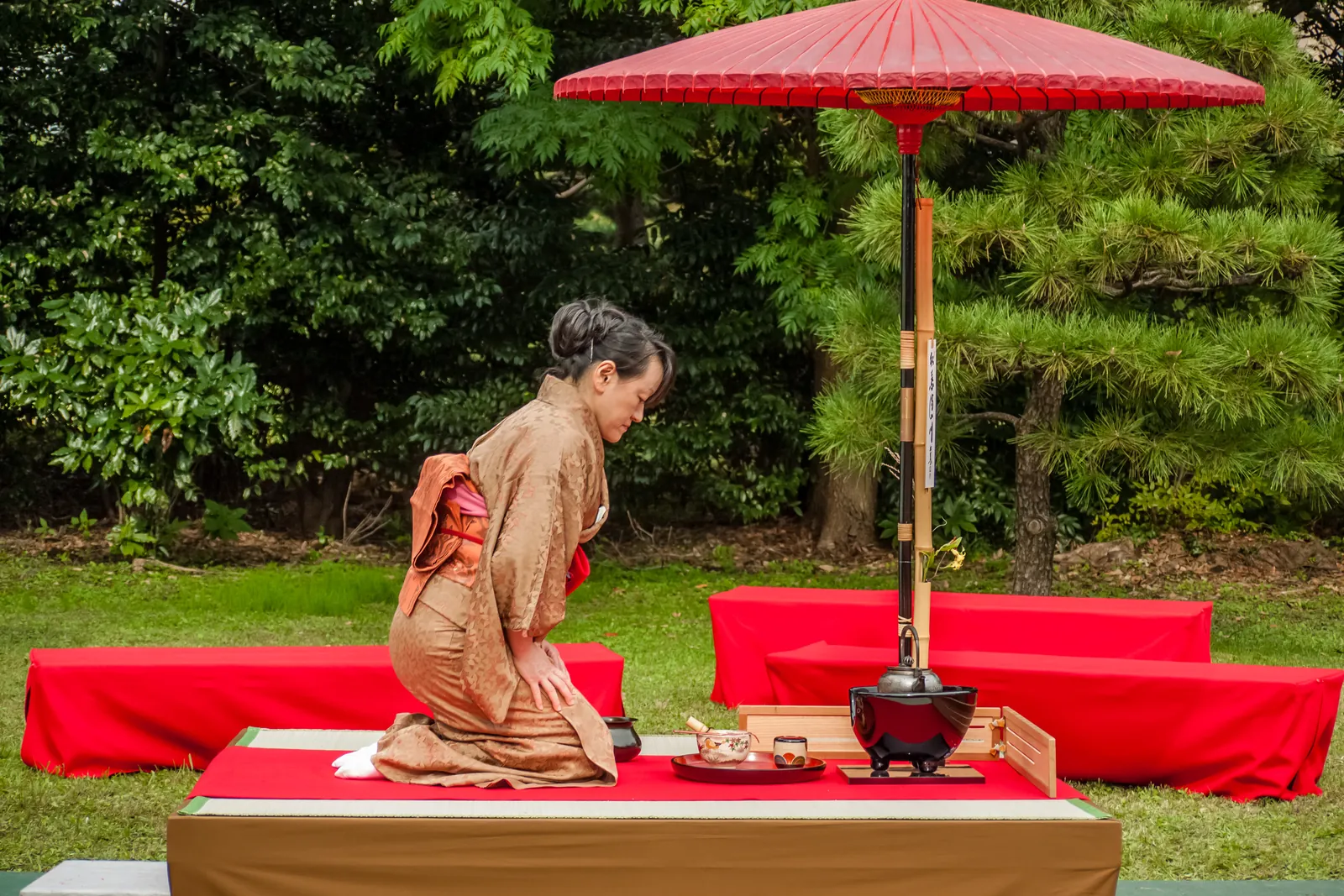
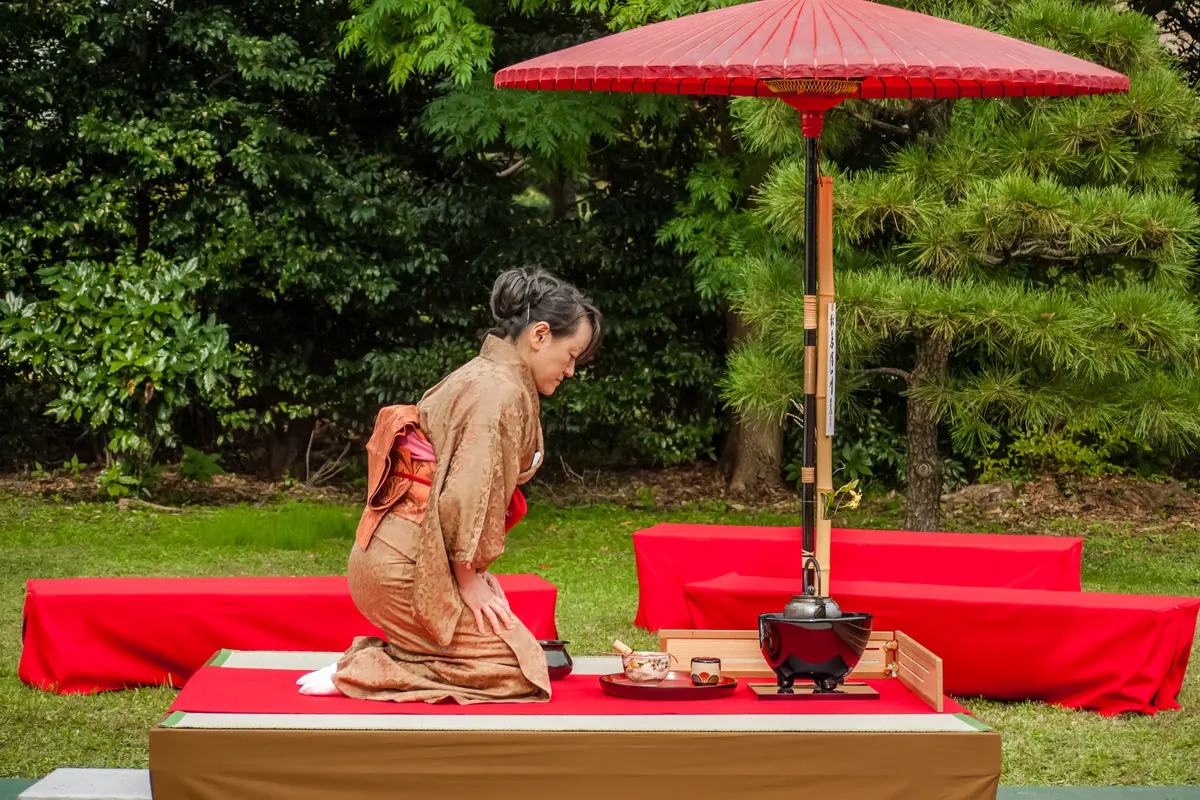
    An experienced tea master performs the ritual of preparing matcha, and you watch the precise movements that define it. Notice the order of the movements: you make a simpler version yourself later.

  4. Taste

    A traditional sweet and the first bowl

    You drink a bowl of freshly prepared matcha with a traditional Japanese sweet chosen to go with it. By Japanese custom the sweet comes before the tea, so eat it first.

  5. Whisk

    Your own bowl

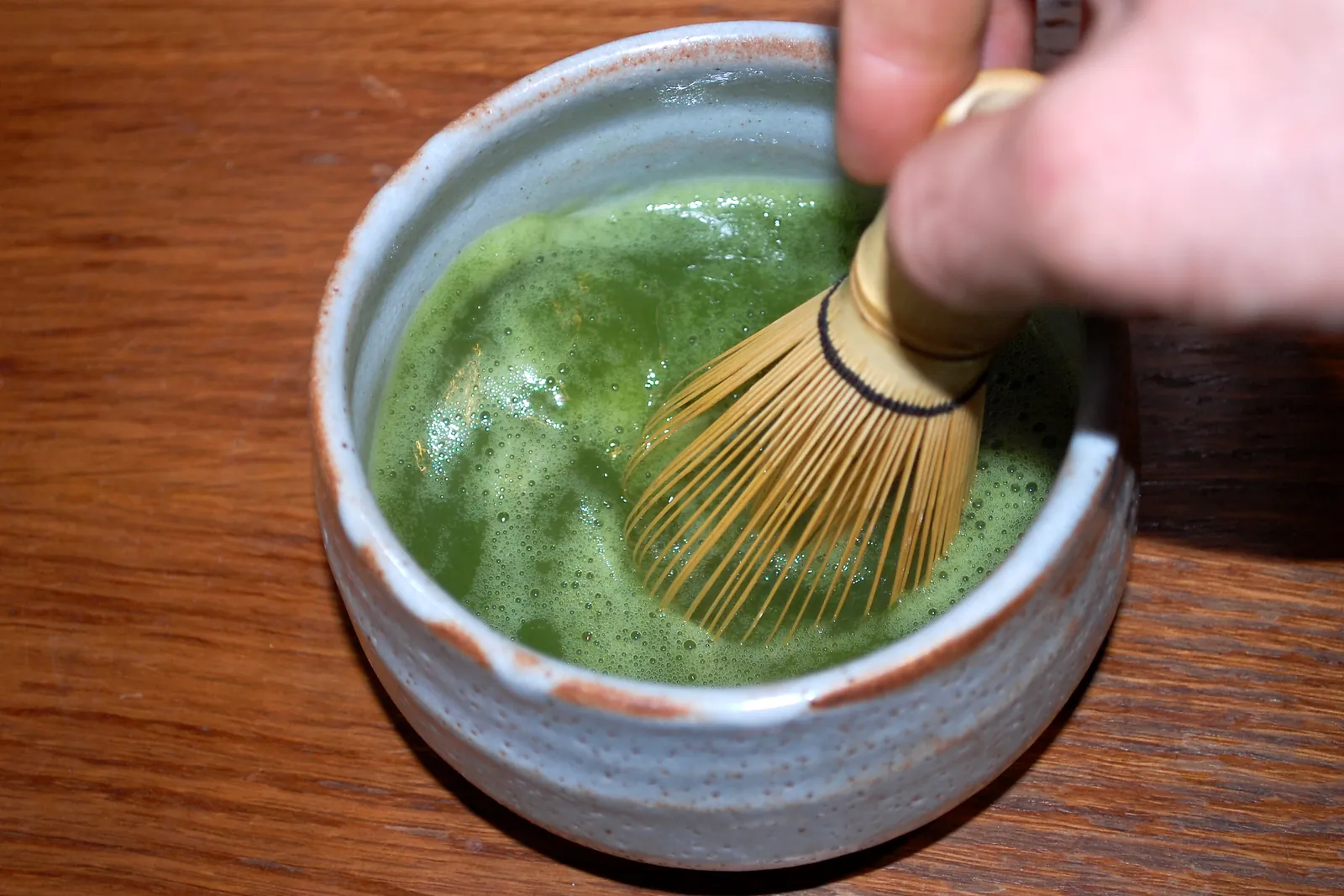
    In the second half you whisk and prepare a bowl of matcha yourself, with the tea master guiding you. The ticket lists two cups of matcha from Uji, one made by the host and one by you.

  6. Ask

    Questions, then a photo

    A question session lets you ask about tea, its history and the philosophy behind the ceremony. The hour closes with a group photo, the garden as the backdrop.

The organiser puts the ceremony at 50 minutes to an hour, and the ceremony takes place rain or shine.

Chanoyu in brief

Why a bowl of tea has rules

The way of tea

Japan's national tourism organisation says the ceremony is known as chanoyu or sado, the way of tea, and calls it a small-scale expression of omotenashi, looking after guests wholeheartedly. Preparing a drink for a guest becomes an art form.
Monks and a twelfth-century bowl

Wikipedia says the monk Eisai brought whisked powdered tea from China around the end of the twelfth century, and that Buddhist monasteries first used it in religious rituals. The tourism organisation adds that the roots of the ceremony lie in Zen Buddhism.

Four principles from Rikyū

Sen no Rikyū, the sixteenth-century tea master, set out harmony, respect, purity and tranquility as the principles of the ceremony, according to Japan's tourism organisation. He also held that each meeting should be treasured because it can never be repeated.

Three schools, subtle differences

Rikyū's descendants founded the Omotesenke, Urasenke and Mushakōjisenke schools, Wikipedia says. The tourism organisation notes that dozens of schools exist, each with small differences, so a host's own instructions always come first.

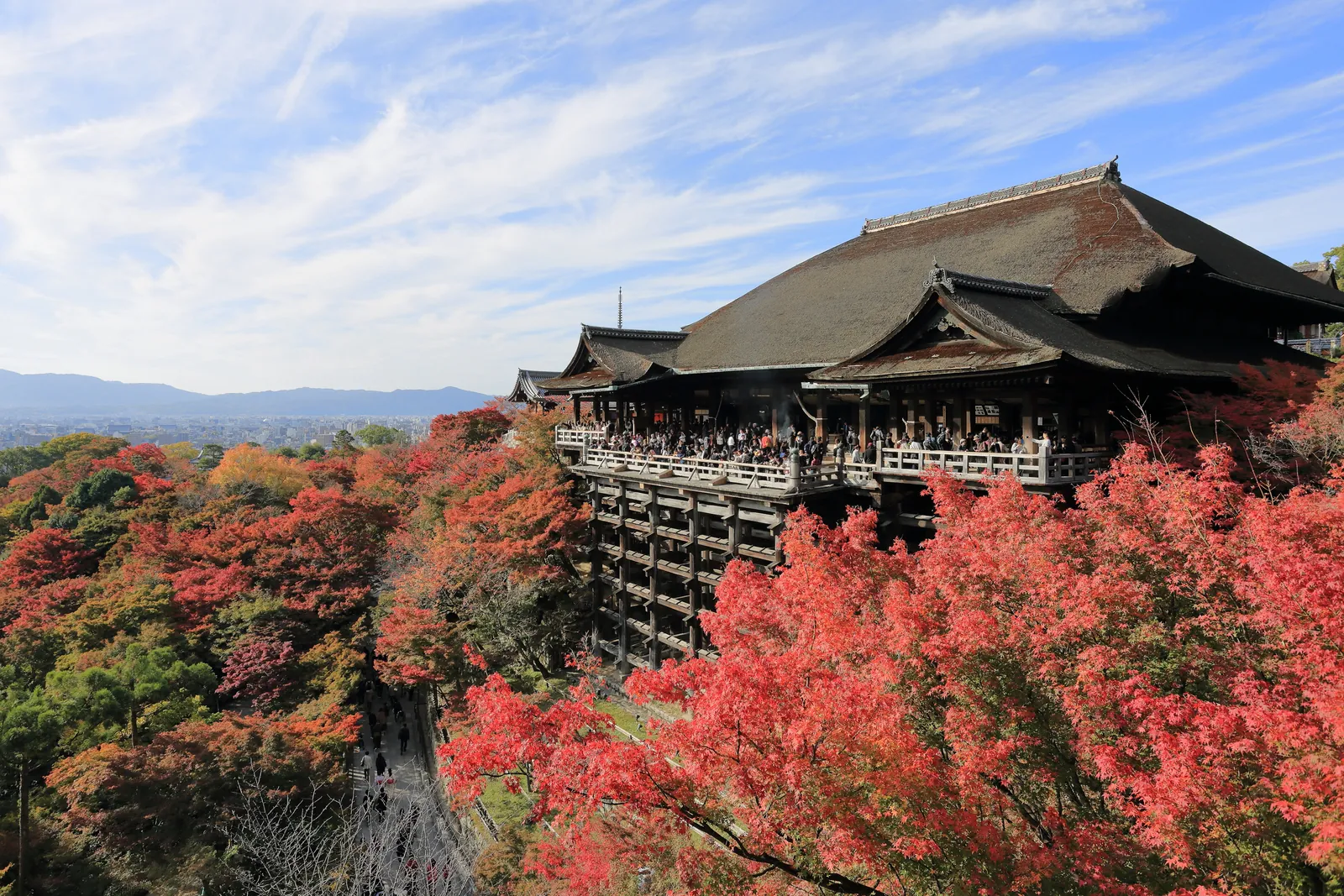
The main hall of Kiyomizu-dera on its wooden veranda above autumn maples, with hills beyond; a general photograph of the temple, not of the tea house

What is in the hour, and what is not

The ticket, line by line

The first three items come with the booking. The last three are the limits to settle before you choose a date.

  • A tea master and a host

    A tea master performs the ceremony, and an English-speaking instructor leads the session. Private groups and small groups are both available.

  • Matcha and a sweet

    Two cups of matcha from Uji, one made by the host and one by you, with traditional Japanese sweets.

  • A photo

    A group photo with the garden behind you is part of the ticket.

  • No kimono rental

    Kimono rental is not available at Sakaguchian, the provider. Card three is a Gion tea ceremony that includes kimono rental.

  • No children aged 7 and under

    Children aged 7 and under cannot enter, so a younger child needs another plan for the hour.

  • No luggage or large bags

    Large bags and luggage are not permitted, so a suitcase belongs at your accommodation or with a luggage service.

Three tea ceremonies in Kyoto

Three tea ceremonies in Kyoto

TicketWhat you getWho it suits
Garden tea house near Kiyomizu-dera This page's ticket: a tea master prepares matcha, you whisk a second bowl, with a traditional sweet, a question session and a group photo. No kimono rental. First-timers who want a garden view and a hands-on bowl
Tea ceremony in chairs, in Gion The second card: a Gion tea ceremony offered in chairs rather than on the floor, with sweets and a bowl you make yourself. Anyone who finds kneeling hard
Kimono and tea ceremony in Gion The third card: kimono rental and hair styling for women are listed as included, then a small-group tea ceremony with a bowl you whisk. Visitors who want to wear a kimono

Check dates for the garden tea house ↗

Choose your tea

Book the tea ceremony that fits

Card one is the garden tea house this page describes. Cards two and three are Gion tea ceremonies: one offered in chairs rather than on the floor, one with kimono rental and hair styling included.

Garden tea house near Kiyomizu-dera

4.8 · 4,573 reviews · From US$56

A tea master prepares matcha, you whisk a second bowl, and a traditional sweet comes with it. The tea house overlooks a garden in the Sannenzaka district.

View open dates ↗

Tea ceremony in chairs, in Gion

4.8 · 745 reviews · From US$36

A Gion tea ceremony offered in chairs rather than on the floor, with sweets, a bowl you make yourself and a question session with the tea master.

View open dates ↗

Kimono and tea ceremony in Gion

4.9 · 2,022 reviews · From US$49

Choose a kimono, have your hair styled, then join a small-group tea ceremony and whisk a bowl of your own. The group is capped at ten.

View open dates ↗

Check dates for the garden tea house

Open dates and fares appear below, priced in your currency.

Also in Kyoto

Browse more Kyoto activities ↗

Before you go

Before you go

  1. Pick the date first

    Open the calendar to see each day's starting times, and remember the ceremony runs rain or shine.

  2. Travel light

    Large bags and luggage are not permitted. Kyoto's tourism association points to Hands-Free Travel counters, including one at Kyoto Station, that forward luggage to your accommodation.

  3. Check who is coming

    Children aged 7 and under cannot enter. If a younger child is travelling with you, plan a different hour for them.

  4. Kimono is a separate booking

    This tea house does not rent kimono. Card three includes kimono rental and hair styling in Gion.

  5. Reach the lanes by public transport

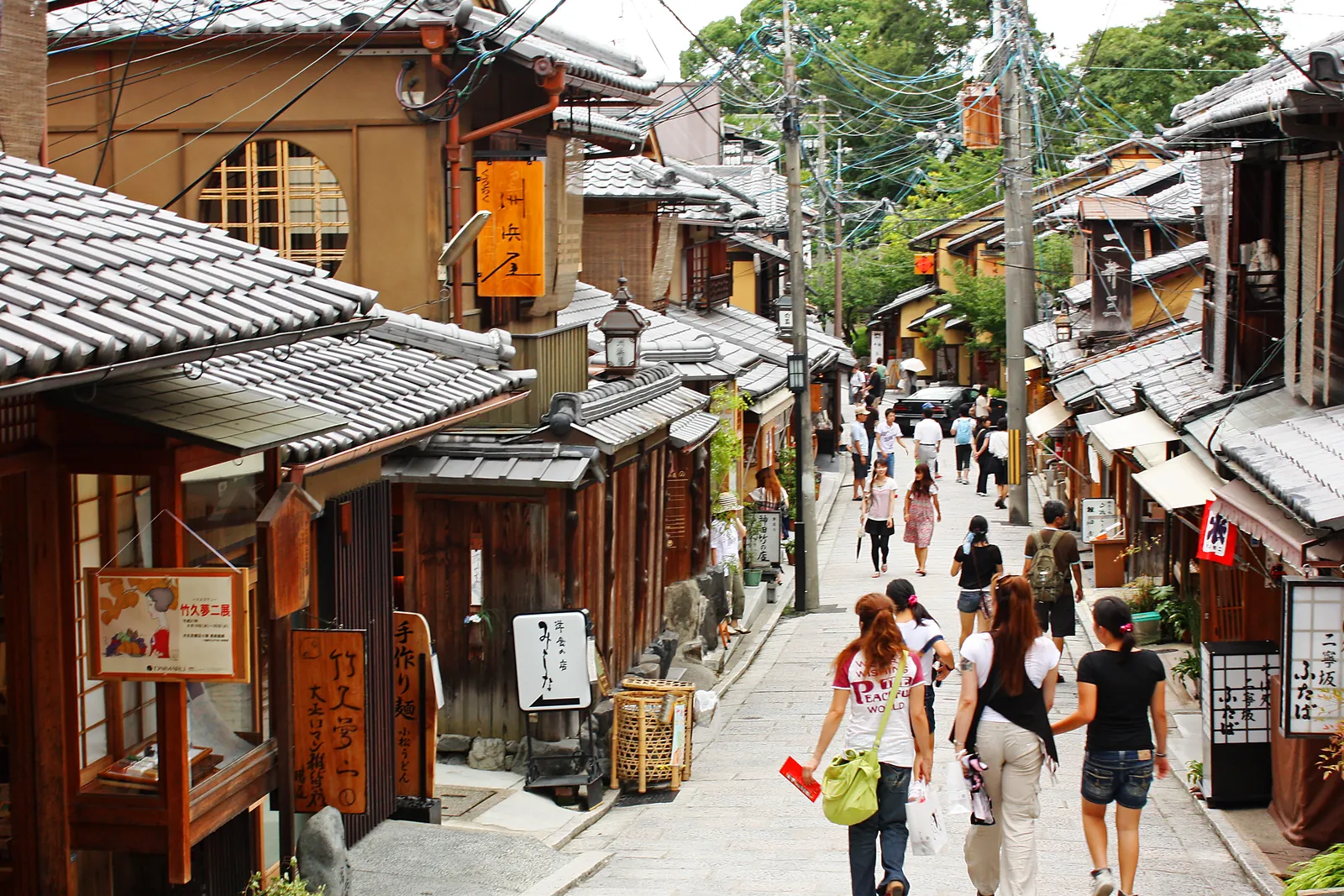
    Kyoto's tourism association calls the Kiyomizu area very crowded, with scarce parking. The booking page names the meeting point.

  6. Changing plans

    If your dates move, GetYourGuide lets you cancel up to a day ahead with a full refund, or keep a slot open and pay afterwards.

FAQ

Questions before you book

What happens at a tea ceremony in Kyoto?

A host prepares matcha in front of you in a set order, you eat a small sweet, then drink the tea. At this tea house you also whisk a second bowl yourself, ask the tea master questions and have a group photo.

Do I need to know the etiquette before I go?

No. Japan's tourism organisation says minor faux pas are always overlooked. The habits worth knowing are small: eat the sweet first, raise and turn the bowl before you drink, and thank the host.

Do I make tea myself?

Yes. The host prepares the first cup, and in the second half you whisk and prepare your own bowl with the tea master guiding you. The ticket lists two cups of matcha from Uji.

How long does it take?

The organiser puts it at 50 minutes to an hour. A formal tea gathering with a meal, a chaji, can last up to four hours according to Wikipedia, so this is an introduction.

Can children come?

Children aged 7 and under cannot enter this tea house, so a family with a younger child needs another plan for the hour.

Can I rent a kimono here?

No. Kimono rental is not available at the tea house. Card three on this page is a Gion tea ceremony with kimono rental and hair styling included.

Can I take a suitcase in?

No. Large bags and luggage are not permitted, so they belong at your accommodation or with a luggage service before you climb to Sannenzaka.

Do I have to kneel on the floor?

A formal ceremony seats guests kneeling on tatami, so expect that. If it is hard for you, tell the host on arrival. Card two is a Gion tea ceremony offered in chairs.

A tea master, a garden view and a bowl of matcha you whisk yourself.

Book the garden tea ceremony ↗

The price converts to your currency when you pick a day.

Pick a ceremony dateFree cancellation, 24 hours out