Where the rules came from
Sen no Rikyū and the schools
Sen no Rikyū shaped the Japanese tea ceremony, and three schools descend from his family. Who he was, what he changed and how the schools differ.
Book the garden tea ceremony ↗Quick answer
Sen no Rikyū (1522 to 1591) is the tea master most credited with shaping the Japanese tea ceremony, favouring rustic simplicity and the wabi aesthetic. Three schools descend from his family: Omotesenke, Urasenke and Mushakōjisenke, together called the san-senke. They differ in small details, such as how much the tea is whisked, which is why a host may ask for slightly different movements.
Rikyū and his time
Rikyū was born in Sakai, now in Osaka Prefecture, according to Wikipedia. He studied tea under a Sakai townsman, Kitamuki Dōchin, and then under Takeno Jōō, who is also associated with the wabi aesthetic, and he trained in Zen at Daitoku-ji in Kyoto. In 1579 he became tea master to Oda Nobunaga and, after Nobunaga's death, to Toyotomi Hideyoshi, and he became the most influential figure in the world of chanoyu. Japan's tourism organisation calls him arguably the best-known figure in the history of Japanese tea.
What he changed
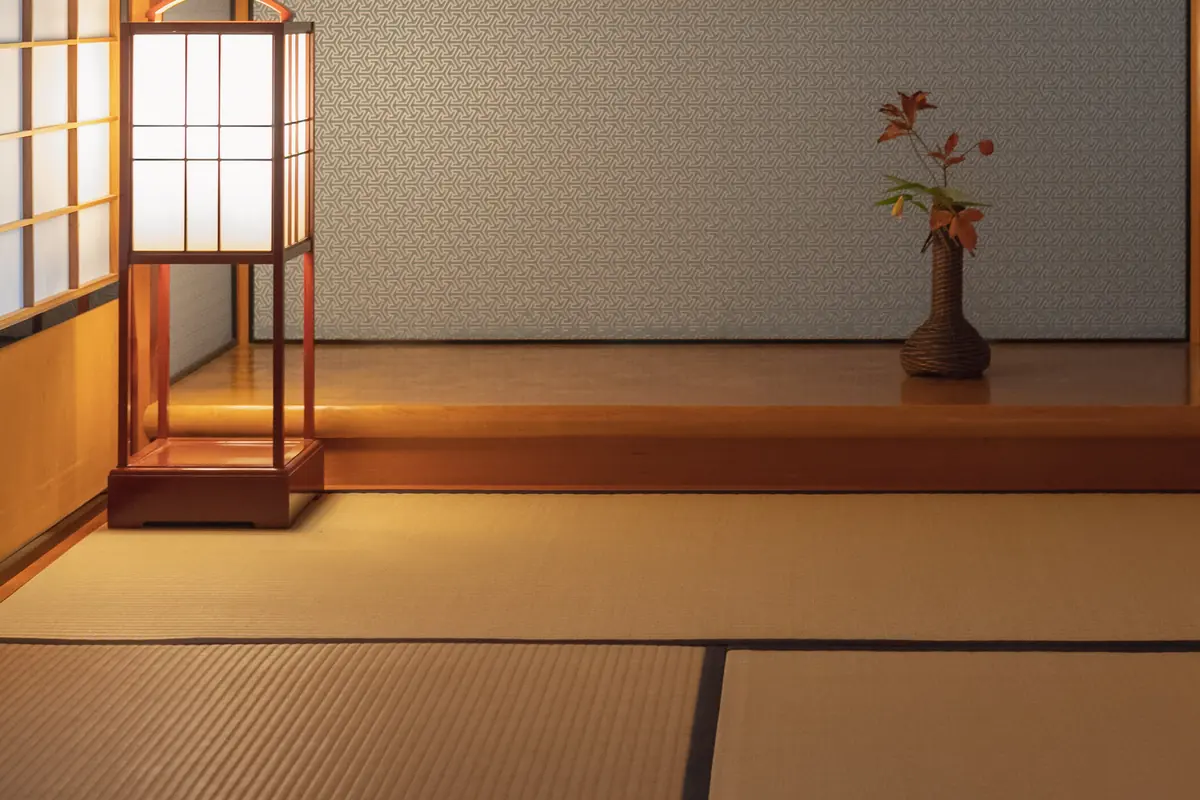
Wikipedia says Rikyū redefined the rules of the tea house, tea garden, utensils and procedure, and introduced a much smaller tea house and rustic ceramic bowls made for tea. In his later years he used tiny rooms such as the two-tatami Tai-an, which Wikipedia says has been designated a National Treasure. Raku ware bowls came from his work with a tile-maker. He preferred simple, locally made items to expensive imported ones, and he developed the wabi style of tea, valuing the beauty found in simple things.
Principles that survive
Japan's tourism organisation says Rikyū held that every meeting should be treasured because it can never be fully recaptured, and that he identified four principles for the ceremony: harmony, respect, purity and tranquility. Wikipedia gives them as wa, kei, sei and jaku and attributes the idea of ichi-go ichi-e, one time, one meeting, to his teacher's concept, which Rikyū followed. Modern masters adhere to the same principles, the tourism organisation says, whichever school they belong to.
After Rikyū
Wikipedia reports that Hideyoshi ordered Rikyū to commit ritual suicide in 1591, despite their long closeness. His family survived. His son-in-law Sen Shōan re-established the Kyoto Sen household, and Shōan's son Sen Sōtan carried it forward. Wikipedia says Rikyū's great-grandchildren founded the Omotesenke, Urasenke and Mushakōjisenke schools, and that the ceremony then spread from daimyo and samurai to townspeople. Japan's tourism organisation says dozens of schools of tea ceremony exist today.
The three houses
Wikipedia explains the names. Omotesenke means the front Sen house and Urasenke the rear Sen house, from where each homestead stood on the original estate. Mushakōjisenke takes its name from Mushakōji street, where that branch settled. The three are known together as the san-senke, the three Sen houses. Wikipedia adds that Urasenke's school introduced ryūrei, tea prepared and served at tables with the host and guests on chairs, initially for non-Japanese guests,.
Differences you might notice
The schools differ in small stylistic points. Wikipedia says the Omotesenke school whisks the tea less than Urasenke, which leaves less foam on top, and that Omotesenke uses both an untreated bamboo whisk and a darkened one, while Urasenke uses untreated bamboo. Omotesenke's own pages list turning the tea bowl twice. A host may follow any of the schools, so the movements you are shown can differ from this page. Whichever school it is, the four principles are shared and the host's instructions are the ones to follow.
Frequently asked questions
Who was Sen no Rikyū?
A sixteenth-century tea master from Sakai who served Oda Nobunaga and Toyotomi Hideyoshi and is considered the most important influence on the Japanese tea ceremony, according to Wikipedia.
What are the three tea schools?
Omotesenke, Urasenke and Mushakōjisenke, the three lines of the Sen family descending from Rikyū, known together as the san-senke.
Does the school matter for a visitor?
Only in small movements, such as how far the bowl is turned. Follow your host's instructions.
What does wabi mean in tea?
Wikipedia says wabi originally meant quiet or sober refinement, marked by humility, restraint, simplicity and imperfection, and that Rikyū emphasised it.
Sources