Getting there and what to expect
Kiyomizu-dera tea ceremony
A tea ceremony near Kiyomizu-dera: where the Sannenzaka tea house sits, how to get there, who cannot come, what to wear and when the garden looks its best.
Book the garden tea ceremony ↗Quick answer
The tea house is in the Sannenzaka district, on the stone-paved slope that leads up to Kiyomizu-dera, and the ceremony runs about 50 minutes to an hour. Come by public transport and without luggage, because large bags are not allowed inside. Children aged 7 and under cannot enter, and kimono rental is not available at this tea house. The ceremony takes place rain or shine.
Where Sannenzaka sits
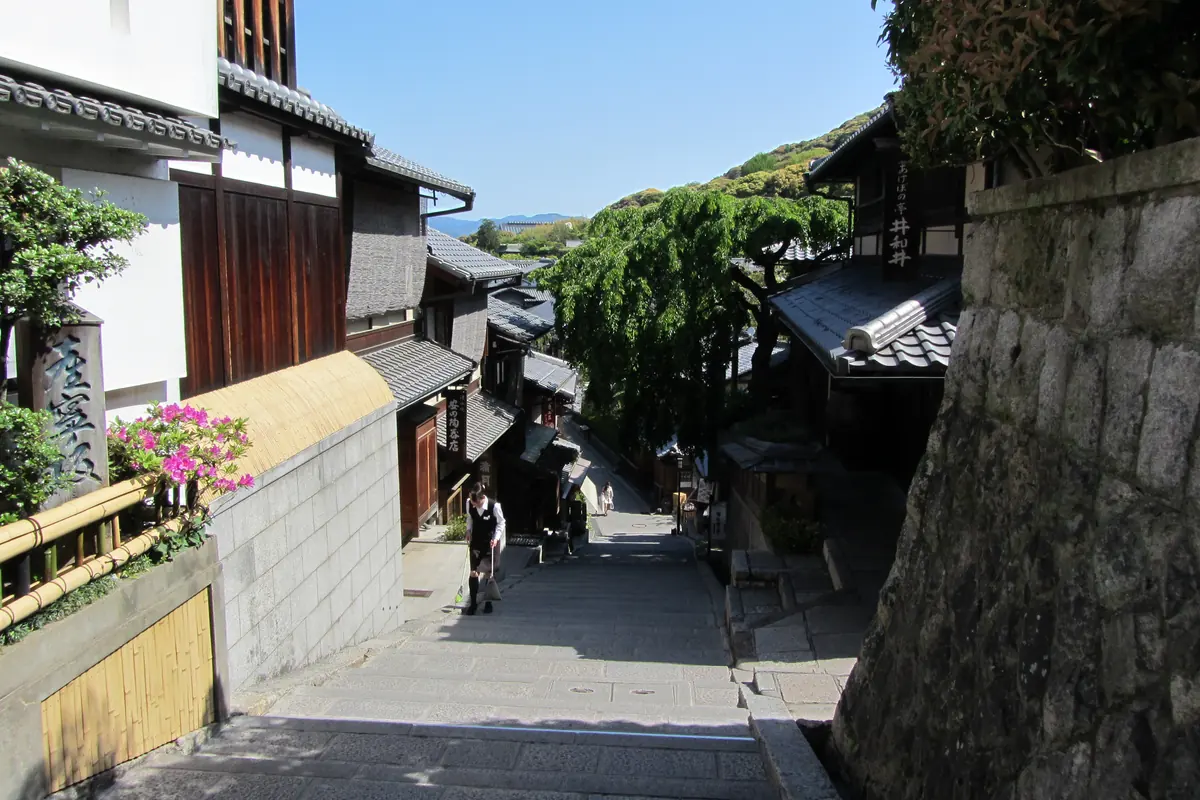
Sannenzaka is a stone-paved pedestrian road in Higashiyama ward, lined with traditional buildings and often paired with the similar road Ninenzaka, according to Wikipedia. Both lead toward Kiyomizu-dera, Kōdai-ji and Yasaka Shrine. Kyoto's tourism association names the approach roads from Kōdai-ji to Kiyomizu-dera as Ichinenzaka, Ninenzaka and Sanneizaka. The tea house is in this district, and the booking page names the exact meeting point, so follow that rather than a map pin. The road is a stone-paved slope, so choose comfortable shoes that are easy to take off, since guests remove their shoes at a tea house door.
What the lanes are
Wikipedia says Sannenzaka is a narrow slope with around 60 shops and restaurants selling traditional products and food from Kyoto, some of them offering hands-on cultural experiences including tea ceremonies. It reports that the area was the first in Kyoto to be nominated as a historic preservation district, in 1972, and records that its real name, Sanneizaka, translates as safe delivery hill. Many of the buildings are Kyo machiya, townhouses with wooden doors, paper sliding doors and mud walls. Wikipedia adds that the road is paired with Ninenzaka and that both lead toward Kiyomizu-dera, which makes the slope the natural approach to the tea house and to the temple.
Kiyomizu-dera in brief
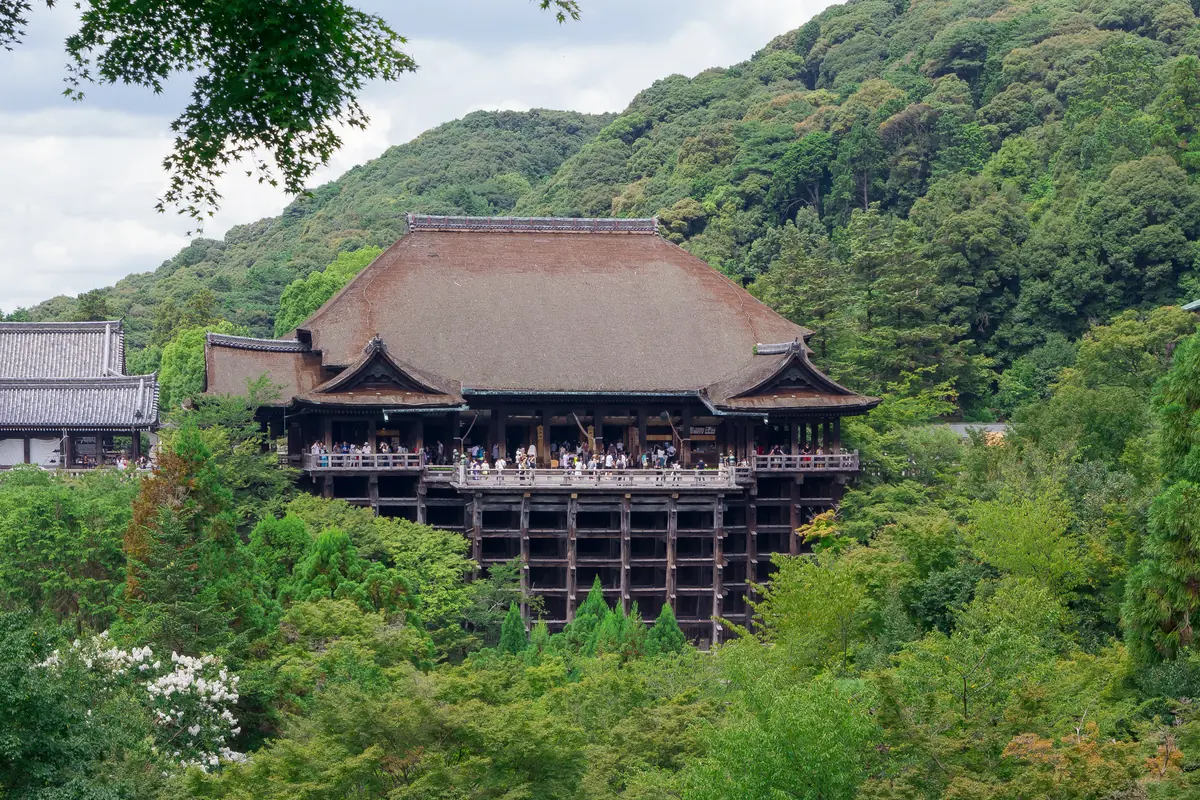
Kiyomizu-dera's own website says the temple was founded in 778, that its grounds hold thirty temple buildings including the national treasure Main Hall, and that it takes its name from the clear water of the Otowa Waterfall, kiyomizu meaning pure water. The site adds that most of the present buildings were reconstructed in 1633, after repeated fires. Kyoto's tourism association describes the main hall's veranda as jutting out from the mountainside on tall wooden columns, with views west over the city. Wikipedia lists the temple within the UNESCO World Heritage site Historic Monuments of Ancient Kyoto.
The garden and its designer
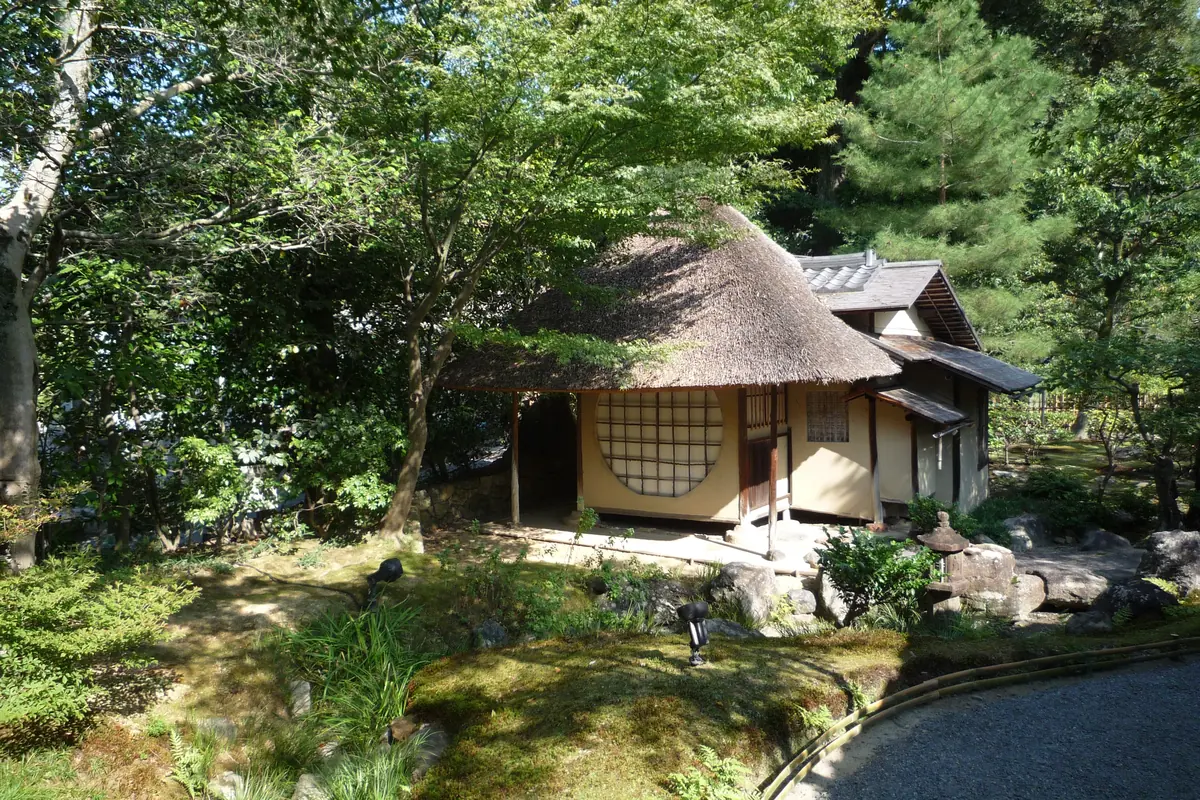
The organiser describes the tea house garden as designed by the landscape artist Ogawa Jihei VII. Wikipedia calls him a garden architect of the Meiji and Taishō eras, head of the Ueji family of Kyoto gardeners, whose works include the Heian Shrine gardens and the garden of the Murin-an villa. It lists borrowed scenery of the Higashiyama hills and the roji, the garden path to a tea house, among the features of his method. That is background on the designer, not a claim about each stone in this garden.
Getting to the lanes
Kyoto's tourism association calls the Kiyomizu area very crowded, with scarce parking, and recommends public transport. It describes a route on foot from Higashiyama Station through Nene-no-michi, Ninenzaka and Sannenzaka. It also asks visitors not to block the road while stopping for photographs, not to smoke on the street, and to take rubbish away rather than throw away food they have bought, and it urges extra care in the cherry blossom and autumn foliage seasons. Leave time before the start so that you arrive calm rather than rushed. For the approach from Kyoto Station, the association recommends a combination of train and bus, and says the city bus to Gojo-zaka, the stop nearest the Kiyomizu slope, is frequently congested.
Luggage and large bags
Large bags and luggage are not permitted in the tea house, according to the organiser. Kyoto's tourism association says large luggage on city buses is a nuisance to other passengers and points travellers to Hands-Free Travel counters, including one at Kyoto Station, which forward luggage to your accommodation. Leave the suitcase at your hotel or with a luggage service before you head up the slope, and carry only a small bag with your phone, a camera and a bottle of water. A hands-free day also makes the lanes easier to walk, since the association describes them as busy.
What the ticket allows and rules out
The organiser lists the following, and the first two items are the ones most often missed when a group books together. Check them against everyone in your party before you choose a date, because a ticket that includes someone who cannot enter is not a ticket you can use. If your group splits, book only for the people who can enter and shape the rest of the day around the lanes:
- Children aged 7 and under cannot enter.
- Kimono rental is not available at the tea house.
- Large bags and luggage are not permitted.
- The tea ceremony takes place rain or shine.
- Private groups and small groups can book, and the instructor speaks English.
- Two cups of matcha from Uji, traditional sweets and a photo are included.
- Through GetYourGuide you can cancel a day ahead for a refund in full, or keep a slot open and pay afterwards.
Before or after the ceremony
Kyoto's tourism association says the temple is perhaps the most popular in Kyoto and has a festival atmosphere, with vendors selling talismans, incense and paper fortunes. Visitors collect water from the falls in tin cups, and drinking from the three streams is said to confer health, longevity and success in studies. The association calls the veranda an auspicious place to watch the sunset. A visit to the temple is a separate outing from the tea ceremony, so treat them as two separate outings.
What to wear
Japan's tourism organisation says guests take off their shoes before entering a tea house, and Wikipedia says guests at a formal chaji put on fresh tabi socks. Wikipedia adds that clothing at a tea gathering is usually subdued and conservative, so as not to distract. For a visitor session, plain clothes and clean socks are enough. Japan's tourism organisation adds that rituals staged to demonstrate the procedure for visitors do not require formal attire. A kimono is optional and, at this tea house, not available to hire, so wear something you can sit comfortably in for the length of the ceremony.
The garden through the year
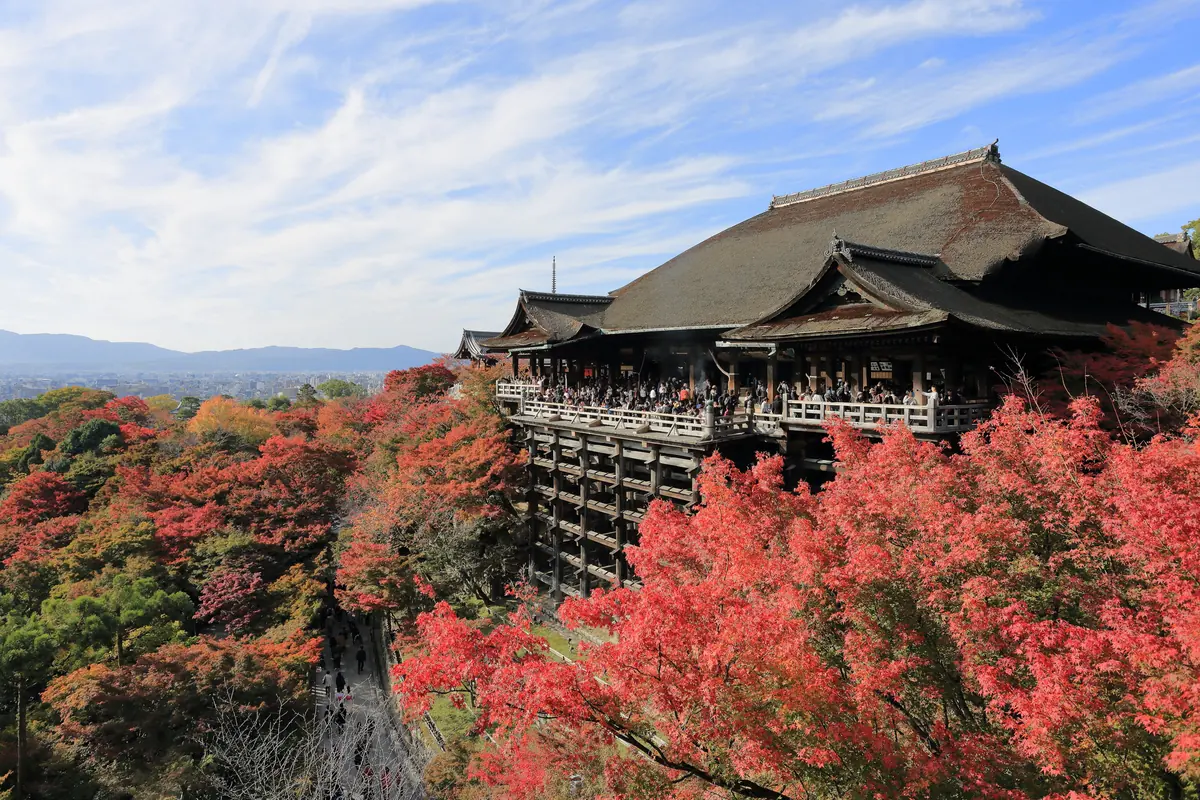
The organiser describes the garden in each season: blossom drifting across it in spring, fresh green maple leaves in summer, crimson and gold leaves in autumn, and a snow-dusted garden in winter. It recommends the cherry blossom season highly. Kiyomizu-dera's website describes the same four seasons on the mountain. Wikipedia adds that tea practitioners traditionally divide the year into a hearth season for the colder months and a brazier season for the warmer ones, with deeper bowls used in winter and shallower ones in summer.
Who this isn't for
Anyone who wants an hour inside Kiyomizu-dera itself should know the ceremony does not include the temple. Travellers with a large suitcase, a child aged 7 or under, or a plan to hire a kimono on the spot need another arrangement. Visitors who want a long, formal ceremony in a historic room should look at what a full chaji involves rather than this introduction, which is closer to a demonstration with a bowl of your own. And anyone who dislikes crowds should know that Kyoto's tourism association calls the area very crowded, and suggests an early visit as the quieter choice.
Frequently asked questions
Where is the tea house?
In the Sannenzaka district of Higashiyama ward, on the slope toward Kiyomizu-dera. The booking page names the meeting point.
How do I get to Sannenzaka?
Kyoto's tourism association recommends public transport because the area is crowded and parking is scarce. One route on foot runs from Higashiyama Station through Nene-no-michi, Ninenzaka and Sannenzaka.
Can I bring my suitcase?
No. Large bags and luggage are not permitted, so leave them at your accommodation. Kyoto's Hands-Free Travel counters can forward luggage from Kyoto Station.
Does the ticket include Kiyomizu-dera?
No. The ticket covers the tea ceremony, two cups of matcha from Uji, traditional sweets and a photo.
What if it rains?
The ceremony takes place rain or shine, according to the organiser.
Can I rent a kimono?
Not at this tea house. Another Kyoto ticket on this site includes kimono rental and hair styling.
Sources
- Kiyomizu-dera Temple: Learn
- Kyoto City Tourism Association: Kiyomizu-dera Temple
- Kyoto City Tourism Association: Comfortable access to Higashiyama (Kiyomizu-dera Temple)
- Kyoto City Tourism Association: Things to keep in mind in the Kiyomizu, Arashiyama and Gion areas
- Japan National Tourism Organization: Japanese tea ceremony
- Wikipedia: Sannenzaka
- Wikipedia: Ogawa Jihei VII
- Wikipedia: Japanese tea ceremony